

At the Rx Foundation, we are privileged to work alongside leaders reshaping public health to be more just, inclusive, and community-driven. One of those leaders is Dr. Michelle Morse, Acting Health Commissioner and Chief Medical Officer of the NYC Department of Health and Mental Hygiene—and a valued Rx Foundation Board member.
Dr. Morse recently co-authored an article in The Lancet, “Moving from Indifference to Reparative Action: A Public Health Approach to Racial Health Inequities in Life Expectancy in Cities in the USA.” The article presents a compelling case for why public health must adopt a reparative approach to racial inequities in life expectancy. It highlights a stark reality: these inequities persist not due to chance or genetics but because of structural decisions that have systematically marginalized Black and Indigenous communities.
Rx’s Strategic Communications Manager, Blessitt Bryant, sat down with Dr. Morse to discuss the article’s key themes: life expectancy inequities, economic justice in healthcare and public health, and philanthropy’s responsibility in advancing structural change. Their discussion underscored the necessity of bold, sustained action to achieve health justice for all.
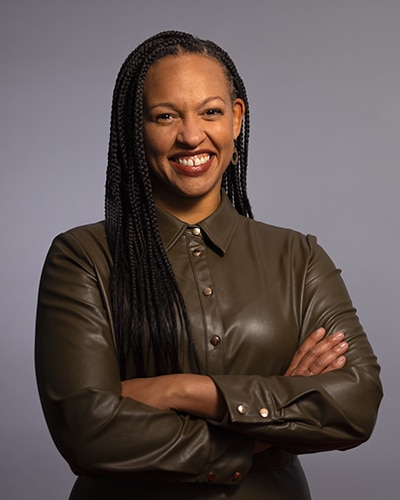
Why Should Healthcare Funders and Industry Leaders Prioritize Racial Health Equity?
Rx Foundation: Your recent Lancet article details the stark inequities in life expectancy across racial and ethnic lines. Why is investing in racial equity in health outcomes not just a moral imperative but a strategic one for healthcare funders and industry leaders?
Dr. Michelle Morse:
“Race is socially constructed, and we see life expectancy gaps along racial lines everywhere in the U.S. That’s not due to genetics—it’s because of the structures we’ve built. These inequities exist because of our history of enslavement and settler colonialism and our choices as a society. That means we have the power to change them.”
Dr. Morse emphasized that philanthropy, which often stems from historical wealth accumulation, has a responsibility to repair rather than simply fund.
“This is not about charity—it’s about repair. Philanthropy must move beyond one-off investments and commit to long-term, systemic solutions that address racialized patterns of life expectancy.”
“Life expectancy gaps are not inevitable—they are the result of our choices. That means we have the power to change them.” — Dr. Michelle Morse
How Do We Disrupt the Belief That These Inequities Are ‘Natural’?
Rx Foundation: One of the most striking points in your Lancet article is that racial inequities in life expectancy have been accepted as natural for generations. How can social justice leaders and healthcare experts disrupt that mindset?
Dr. Michelle Morse:
“Honestly, I used to believe that if we showed the data—if we made it clear that Black, Latinx, and Indigenous communities were disproportionately dying during COVID—that would be the wake-up call. But the urgency faded. We have to ask why.”
Dr. Morse’s words underscore the pressing need for immediate action in addressing health disparities. She pointed out that many still believe health inequities result from individual behavior rather than systemic injustice.
“If people believe Black communities have lower life expectancy because of bad personal choices, they won’t see a reason to change the system. We have to reframe this conversation to make it clear that these inequities are designed—and what is designed can be redesigned.“
— Dr. Michelle Morse
Health inequities are not inevitable. They are the result of structural decisions, and as such, they can and must be changed.
What Role Should Healthcare Institutions Play in Economic Justice?
Rx Foundation: Your article discusses how eliminating the racial wealth gap through reparations could significantly close the life expectancy gap. What role should healthcare institutions and funders play in advocating for economic justice?
Dr. Michelle Morse:
“Public health has long acknowledged the link between socioeconomic status and health outcomes, but wealth is an even more powerful determinant. And healthcare institutions have largely avoided this conversation.”
She highlighted the Anchor Institution Model, where hospitals and health systems commit to hiring locally and contracting with minority-owned businesses, as one approach to advancing economic justice.
“Healthcare institutions are often the largest employers in their communities. They should use that power to invest in economic justice—not just as a side project, but as a core institutional strategy.”
— Dr. Michelle Morse
Dr. Morse also challenged funders to push healthcare institutions beyond traditional lobbying for revenue protection into advocating for policies like reparations and community wealth-building.
A Call to Action for Funders
Rx Foundation: Your article makes it clear that we cannot address racial inequities in life expectancy without sustained investment. If you had one message for healthcare funders right now, what would it be?
Dr. Michelle Morse:
“Be ready to act—quickly, boldly, and outside your usual portfolios. We are entering an era where public health will be tested beyond what we’ve seen before. If philanthropy sticks to business as usual, we will fail the communities that need us most.”
Continuing the Conversation
Dr. Morse’s Lancet article and this conversation reinforce a crucial truth: Health justice is not a theoretical concept—it’s a fight for the right to live.
Her insights remind us that racial inequities in life expectancy are not accidents; they result from structural policy decisions that can and must be changed. Philanthropy has a role to play, but it’s not just a role—it’s a responsibility. We must be willing to move beyond indifference and into reparative action.
We are deeply grateful for Dr. Morse’s leadership, her unwavering commitment to health equity, and the opportunity to share her voice with our community. We are also thankful for your potential contribution to this vital cause.
Join the Movement
At the Rx Foundation, we are committed to supporting transformative solutions that address the root causes of health inequities. Stay connected with us to learn more about how we can collectively push for a healthcare system that truly serves everyone.
Please sign up for our newsletter and follow us on LinkedIn and BlueSky to stay connected!
Learn more about Dr. Michelle Morse’s work

Dr. Morse was featured as a Cycle Breaker in the Smithsonian’s six-part series amplifying the work of changemakers actively reshaping equitable healthcare for the future.
@smithsonianchannel For Michelle Morse, serving communities of color that have been excluded from healthcare access, and becoming an effective agent of change on their behalf, revolves around a radical promise: to focus the principles of any organization she’s involved with around community care, not profits. Watch the latest episode of Cyclebreakers ⬆️ #CycleBreakers #TheColorOfCare
♬ original sound – Smithsonian Channel

Connect With Us on Social Media
Follow-us on social media for the most up-to-date news, resources, and events from the Rx Foundation and its partners.